



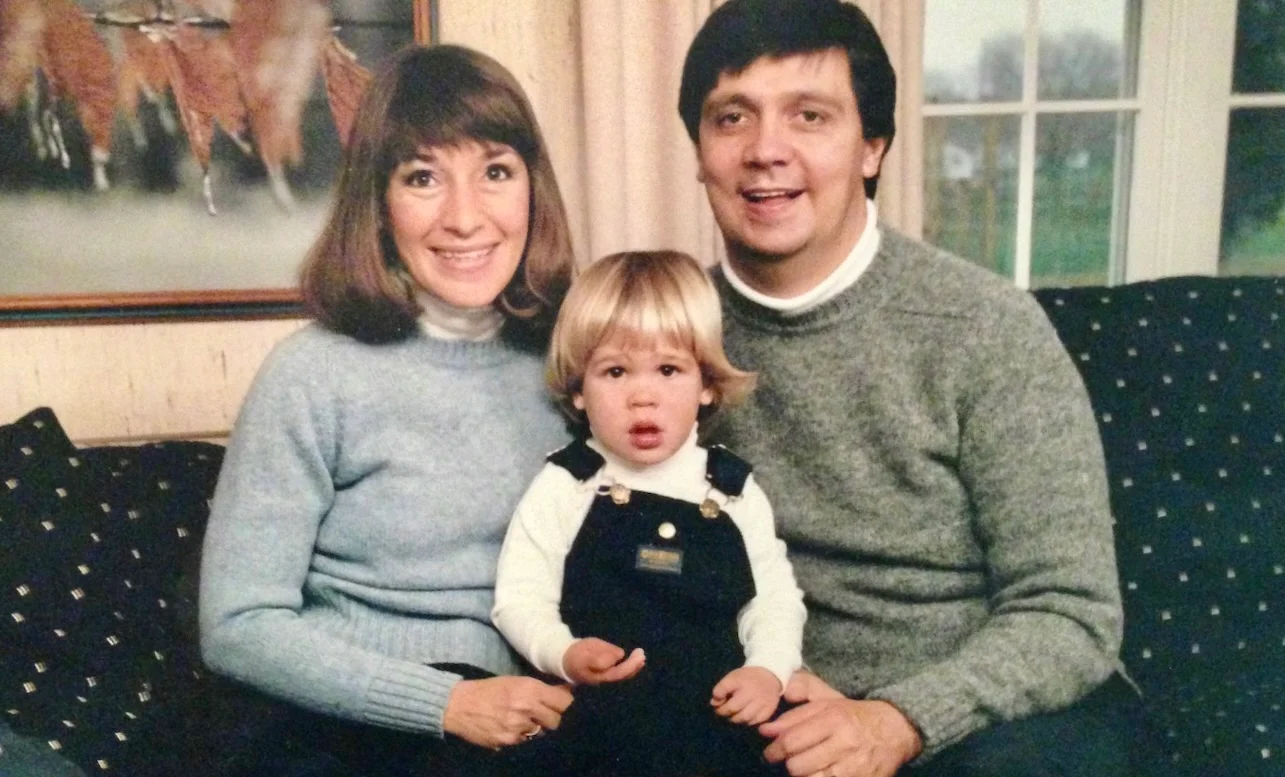
When I was growing up, people thought my parents were separated. It wasn’t because they got in public fights in parking lots. It’s because my parents took separate vacations with me. Over January break, my dad would take me to Colorado to ski. And then at spring break, it would be my mom’s turn to take me to Boca to lie on the beach all day and go to the movies at night. This arrangement was ideal for two parents who love each other very much but have wildly different interests. My mom isn’t a huge fan of the cold, and my dad doesn’t love to, as he says, “sit around in the dirt.” So, they took separate vacations, and the beauty of being an only child is that I got to go on both. (I can’t believe only children are stereotyped as spoiled.)
I never felt like I had a “normal” family. And I don’t mean that the way someone says, “We’re not a normal family” and then it’s a straight couple with three kids who are like, “Sometimes we have breakfast… FOR DINNER!” Obviously, there is no such thing as a normal family, that’s a myth from Christianity and capitalism to make people buy sectional couches and bulk toilet paper. But growing up, I couldn’t help feeling like my family was different because I didn’t have any siblings.
Like most kids my age, I lived for TGIF on ABC, the block of family sitcoms that played every Friday night. There were many different families portrayed on these shows, but the thing they had always in common was multiple children. Some shows had big families, some had blended families, but there weren’t many shows depicting my home life: the sole child living with two adults. Maybe because that’s not a fun show for kids to watch — it would mostly be about the adults opening mail while the kid reads alone in her room. It’s not compelling television, but it was certainly a nice life.
In the heyday of BuzzFeed quizzes and millennial meme culture, I was bombarded with content about what birth order says about you. Personality traits, preferences, and conflict styles were all neatly ascribed to whether you were an oldest, middle, or youngest child. When these memes occasionally included an only child, it was like, “Oh yeah, and these freaks have no idea how to fight.”
When people ask me if it was weird to be an only child, I tell them no, because I didn’t know any other way. Having siblings was as foreign-seeming to me as having a pet iguana whose tail was always falling off and being found behind doors or between couch cushions, like my friend Sean had. Of course I had my own room, who else would I share it with? Of course all these toys and clothes are mine, who else’s would they be? Of course I am terrible at handling conflict, who would I have fought with? My stuffed animals? They’re all pacifists, even Walt the warthog.
Growing up, I was rarely jealous of my friends who had siblings: The younger ones were like weird babies, and the older ones all seemed like assholes who thought we were weird babies. Sure, sometimes it was nice to go to someone’s house and have enough people to play Capture the Flag. But I mostly remember getting home, going up to my room, and lying on the bed in silence like a 44-year-old decompressing at the end of a long day at the office. And I knew the only person who might come bother me was my mom letting me know it was almost time for dinner — a dinner that I liked because you have more freedom to be a picky eater as an only child, when you’re just one finicky palate to cook for.
As a preteen, though, I sometimes wished for a sibling: specifically, an older sister. Older sisters are, from what I can tell, the meanest human beings on the planet, but they are also the gatekeepers to becoming a woman. They know about tampons and foundation and getting asked to dances and that the cool girls in high school don’t carry backpacks, they wear messenger bags. I lived and died by my stacks of teen magazines, but flipping the stark white pages of Seventeen is not the same as your sister coming into your room, pulling out a lip liner, and showing you how to use it. If you have an older sister, you don’t have to use the metallic gunmetal-gray Lancôme eye shadow your mom gave you from a bonus gift at Nordstrom, apply it alone in your poorly lit bathroom, and then wear it to the Friday-night dance looking like you got a black eye from a robot.
Instead, because I was the youngest person around by more than two decades, everything — activities, entertainment, topics of conversations — was geared toward adults. And I liked being able to hang with the big dogs (aka talk to my parents about what they liked). I was the kid who had no problem befriending teachers, talking to them a bit more like a peer, because that’s how I was treated at home. (I’m sure they loved that and weren’t at all annoyed by a nine-year-old talking about what she saw on 60 Minutes.)
There is one element of being an adult only child, however, that really scares me. As my parents get older, I’m more aware every day of the job of being their sole caregiver. I am so, so, so unbelievably scared of what that is going to look like. As they march on into their seventies, do I sometimes wish I had a brother or sister to deal with the uncertainty of the future together? Sure. Would I trade my life as an only child with my parents to have that? No fucking chance.
My parents and I get to do things that so many people don’t, such as spend quality time just the three of us. The best example of this is our annual winter trip. Many years ago, we decided to go “no gifts” among the three of us, and instead put all the money into one very nice vacation. We go every January to Aruba. It’s my favorite week of the year. We arrive separately and spend all day reading books and drinking near one another in the sun. And then we go have dinner at one of the many Italian restaurants in Aruba that exist for some reason. I love it because it’s just us. It’s the tropical version of what every day felt like growing up in our house. We’re not forced to accommodate others. We do the things we want when we want to. And my dad doesn’t even mind reading his book “sitting in the dirt.”

Alison Leiby is a writer and producer, and co-host of the podcast, Ruined. Her television work includes The Marvelous Mrs. Maisel, Life & Beth, and Ilana Glazer’s Comedy on Earth special. Her writing has appeared in The New York Times, New York magazine, McSweeney’s, Cosmopolitan, and many other outlets. This shortened excerpt is from her new collection of essays, I’m a Lot, which came out earlier this month. You can buy it here, if you’d like.
P.S. More posts about only children and what age gaps do your kids have?
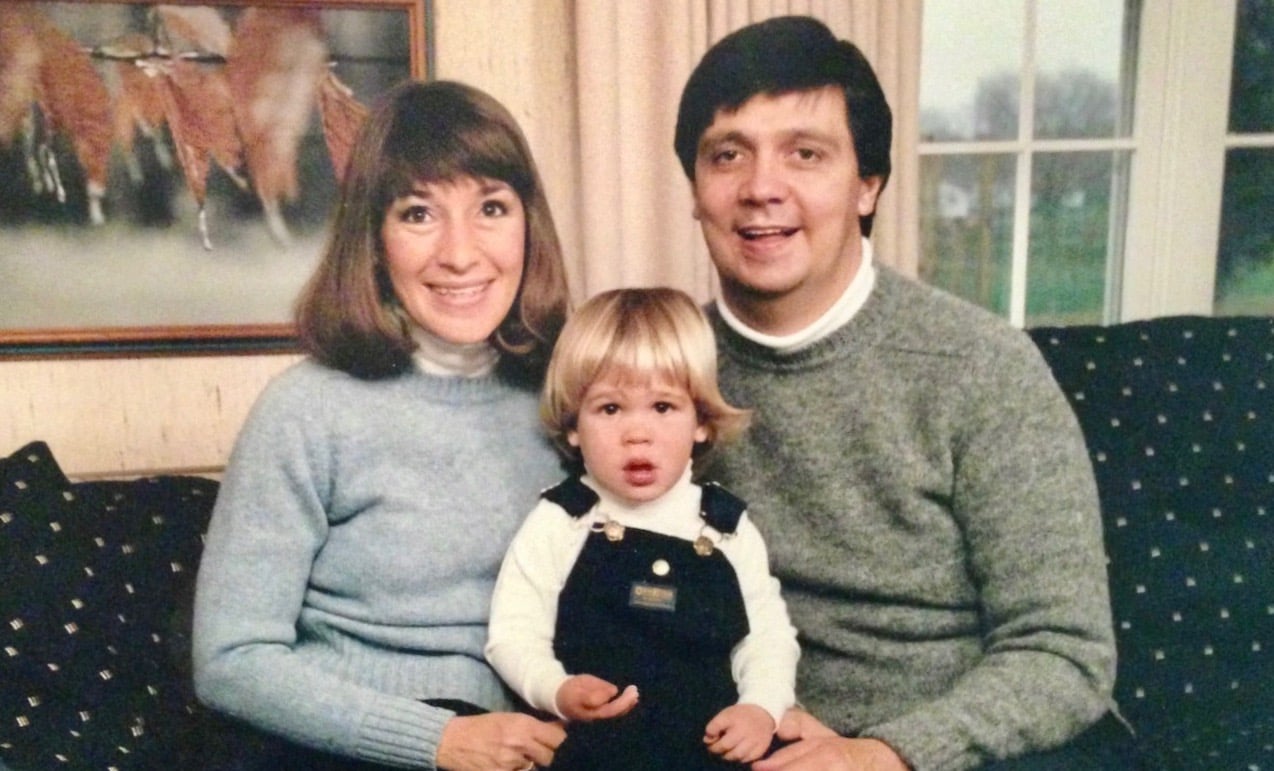
(Author photo by Mindy Tucker, family photo courtesy of Alison Leiby. Excerpted from I’m a Lot by Alison Leiby. Copyright © 2026 by Alison Leiby. All rights reserved. No part of this excerpt may be reproduced or reprinted without permission in writing from the publisher.)