



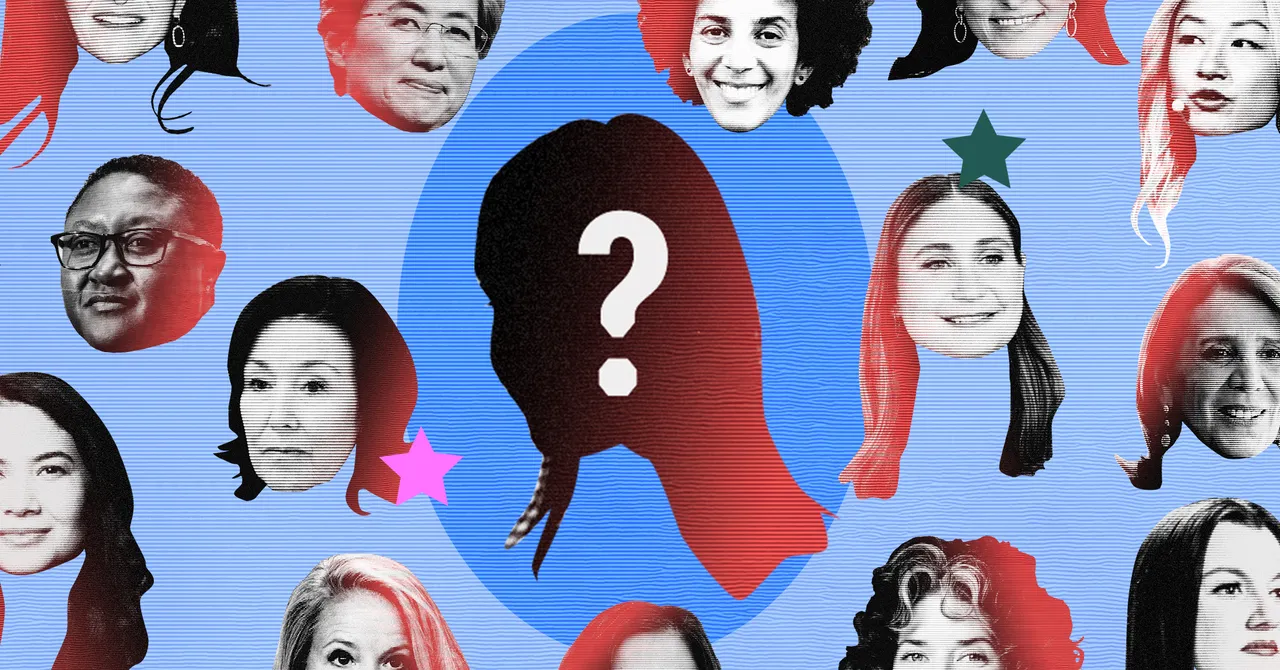
Anthropic has a remarkable number of women in its leadership ranks. Its chief product officer, chief people officer, head of public policy, head of design for Claude, head of platform engineering, head of product for coding, head of product for research labs, and head of “personality alignment” for AI models (yes, that’s a thing) are all women.
(More recently, another woman close to Anthropic has emerged as something of a power player. According to The Information and The Wall Street Journal, Dario’s longtime partner, Cami Clark—who reportedly tried to get Jeffrey Epstein to invest in her porn company—was instrumental in connecting him with some of Anthropic’s early financial backers.)
In a June interview with Bloomberg’s Emily Chang, the Amodeis revealed that Dario largely sidesteps having direct reports, while Daniela runs the day-to-day operations. All of the leadership team reports to Daniela. “That sounds like a pretty sweet job,” Chang said to Dario, her brows raised. “It’s incredibly freeing,” Dario replied, with his trademark enthusiasm. “It lets me do all the things that I do, much more easily than I would otherwise.”
“And she does all the work?” Chang replied. Dario faltered in his response.
I asked Daniela what she makes of Chang’s points and the responses they elicited. (“I saw that interview, and it just showed me how much Dario thinks he’s a special boy,” a friend in one of my group chats fumed.)
“Dario and I very much run the company together,” Amodei insisted. “I think everyone who knows the company really well or works here knows it’s a two-person ship.” She believes it would be hard for one person to run a company at the “level of consequence” of Anthropic.
Daniela has amassed considerable financial, intellectual, and cultural capital. She is not, however, the face of Anthropic’s political agenda. That’s her brother and, more recently, Anthropic cofounder Tom Brown.
“I worked on Capitol Hill before, and I know enough to be dangerous,” she told me. “I do go to Washington, and I think it’s a matter of what’s happening in the headlines versus behind the scenes.” She engages on topics like trust and safety or how AI will impact future generations—things viewed “not necessarily as the most sexy,” she explained.
And who arbitrates the “most sexy” issues in artificial intelligence? We already know the answer to that.
With her fleet of women executives and her stated ethos of non-gendered AI, Amodei may emerge as a historic figure in Silicon Valley, depending on the fate of her company. What she’s built may signal a new era of corporate culture and achievement for women. But when I asked other people if the AI boom presents ample opportunities for women, their outlook was less rosy. Bracy, who wrote World Eaters, flatly said, “No.”

They’re not afraid to call out tech’s failings