



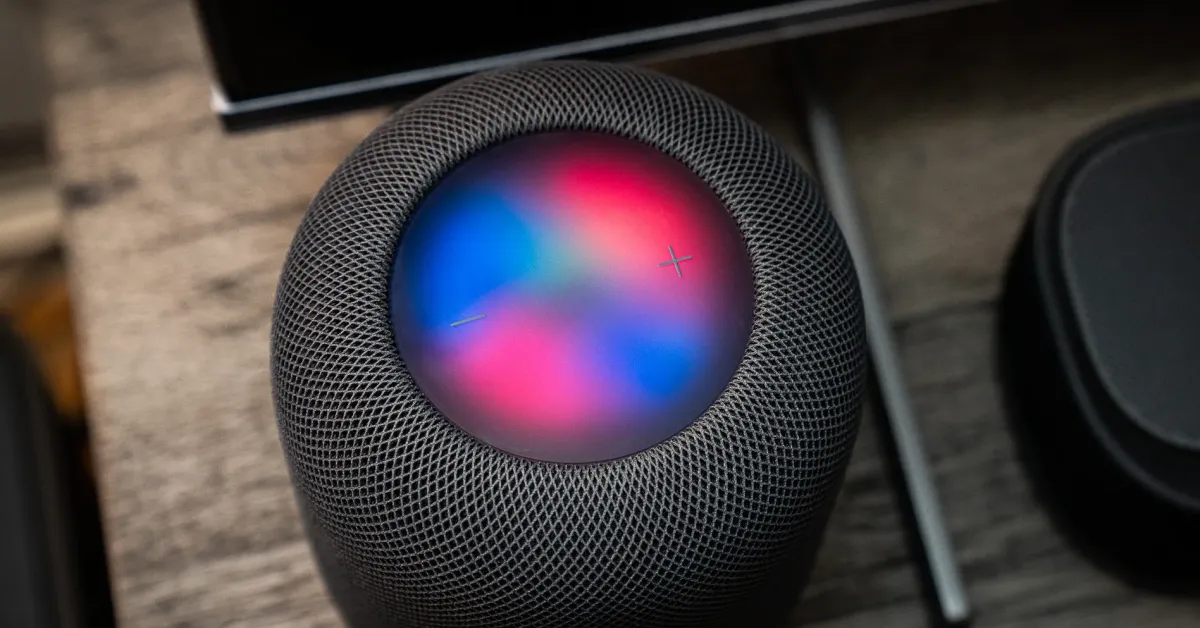
This week, Apple is hosting its first-ever dedicated smart home event. While the company hasn’t shared details about what it will reveal at the “Welcome Home experience” in New York City on Tuesday, October 13th, it doesn’t take an army of internet sleuths to deduce we’ll get news about Apple Home — specifically, new hardware. Apple finally seems to be taking the smart home seriously.
According to Bloomberg, Apple will release a smart home display alongside a refreshed HomePod Mini and Apple TV. The display, which MacRumors reports may be called HomeView, is arguably Apple’s first dedicated Apple Home hardware since it launched the HomeKit platform in 2014. As exciting as this is (and I’ll be there in person to check it out), the real shift will be bringing Siri AI and Apple Intelligence into the home. Apple is years behind Google and Amazon in smart-home hardware, but success in the home depends far more on software. That’s where Apple could leapfrog the competition.
New home hardware is long overdue. Apple announced the HomePod Mini on October 13th, 2020, six years to the day from this week’s event, and the newest Apple TV 4K is now four years old. And those aren’t dedicated smart home devices; they’re more content-consumption gadgets with a side of home automation. The new smart display is reportedly designed to be the heart of Apple Home, marking a complete reboot of the ecosystem, and Apple Home users have wanted it for years.

The smart display category has a bumpy history. Amazon and Google have launched several generations of these voice- and touchscreen-controlled smart speakers that can control smart home gadgets like lights and locks, pull up doorbell camera feeds, and make video calls. But the category has seen very little innovation, and its best use case has been serving as a digital photo frame.
Based on leaks, Apple’s product doesn’t sound that different from what’s come before. According to Bloomberg, it will have a 6-inch square display on a speaker base or as a wall-mounted option, facial recognition to show your personal messages and calendar, a minimalist touchscreen interface to control locks and thermostats, and FaceTime and intercom calls. Nothing groundbreaking, except the rumored price — $350, ouch. The difference has to be in the software and the smart assistant that powers it.
Bloomberg reports the smart display will launch with a brand-new homeOS built around Siri AI. Generative AI has breathed new life into the smart home voice assistant by both making it easier to talk to and expanding its capabilities. Until now, Apple’s new Siri AI has been MIA from its HomePods and Apple TV; when you talk to those, the old Siri responds in its basic, functional way.

Apple is the last of the big three to bring generative AI to its home assistant. Amazon and Google launched theirs last year, but Alexa Plus is only just starting to get it right, and Google’s Gemini for Home, an underpowered version of Gemini, is a confusing mess of capabilities. Now it’s Apple’s turn, and if the company can successfully merge its superpowered personal assistant on your iPhone with a superpowered assistant for your home, it may have a hit on its hands.
That’s a very big if. So far, every company has hit significant roadblocks bringing a smarter assistant to the home. Apple announced Apple Intelligence in 2024, but Siri AI only arrived last month; a version of Alexa Plus was announced in 2023 but didn’t launch until 2025; Gemini for Home is still in an early access program and split into a weird hybrid model where its more capable version, Gemini Live, is restricted from interacting with the home.
These cautious approaches are down to the fact that the home is a big, complicated, messy, multi-user environment that is hard to control. An agentic AI getting something wrong could have consequences far greater than accidentally sending an email. Smart home systems are connected to critical infrastructure like HVAC, locks, and security systems. Every home is different, with unique needs — there is no single plug-and-play solution.
Progress has been made toward solving one of the smart home’s biggest challenges: interoperability, with open standards like Matter and Thread promising to make setting up and using a smart home easier. But these are protocols, not software. It’s the platforms that have to make the smart home work. Here is where Apple may have the edge.
Four years ago, after helping found Matter, Apple rebuilt HomeKit’s underlying architecture and revamped the Home app, laying a strong foundation. That move also let Apple Home work with more devices from more manufacturers (previously, it was limited to those willing to go through the often arduous HomeKit approval process).

However, a smart home isn’t just about the devices you put in it. It’s about making them work together. That’s where Siri AI and Apple Intelligence could play a major role. While Apple used Gemini models to build Siri AI, Google itself has struggled to deliver a compelling experience in the home. So Apple’s opportunity lies in execution. Its more curated approach to third-party hardware has held it back, but it also means Apple arrives at this crucial moment with less technical debt and a cleaner foundation for building an AI-powered smart home.
This will be the next level for the smart home; with reliable data and context, your home could know who’s in it, where they are, and what they need, and, combined with knowing the status of every device, become proactive. For example, it could alert you that the oven is on and no one is home, suggest turning off the AC when a window is left open, and route messages and notifications to the room you’re in.
A smart home isn’t just about the devices you put in it. It’s about making them work together
This is still a distant promise, however. Today, Apple Home has significant limitations: it doesn’t support every type of home device (no fridges, washing machines, or EV chargers); it can’t control every feature of many device types; and its automations are limited compared to the competition (notably lacking conditional programming options inside the app). All this makes the Home app very easy to use, but extremely underpowered.
With Siri AI, Apple could unlock many of those capabilities via voice instead of building complicated menu interfaces. You could just tell Siri what you want your smart home to do. Alexa Plus offers this with the ability to create routines using your voice; Gemini for Home lets you use natural language in its Home app chatbot to set up automations; and many smart home companies are adopting AI in their apps to cut through UI complexity and make devices and features easier to use.
A big question remains: do people really want a smart home? Many of us have spent years frustrated with systems that hold so much promise but routinely fail to deliver, leaving us spending weekends troubleshooting why the garage door won’t open. The truly dedicated have turned to Home Assistant, a powerful platform that can do almost anything you want, if you’re willing to do the work. But for most people, beyond a few solutions to specific problems, the smart home just isn’t worth it.
Apple can’t make everything for the smart home, but it can make sure that everything works with its platform.
To win in the smart home and bring the category mainstream, Apple needs more than just great hardware; it needs a superior software experience that makes the smart home easy to use. It needs to integrate seamlessly with third-party devices and deliver a consistent, reliable experience, relying on local control wherever possible and making sure products just work.
Apple is reportedly partnering with LG and others to develop products for an “Apple Home Collection” that will add a layer of Apple polish to the smart home experience. While this might sound like going back to the walled garden of the HomeKit days, Matter ensures interoperability with other platforms. Apple can’t make everything for the smart home, but it can make sure that everything works with its platform.
Most crucially, Apple will need to double down on its commitment to privacy and data security, especially as it opens the home to Apple Intelligence’s cloud-based capabilities. If Apple can deliver on all of this, its highly anticipated smart home display might justify its price. But the real test will be whether Siri can make the smart home live up to its promise.