



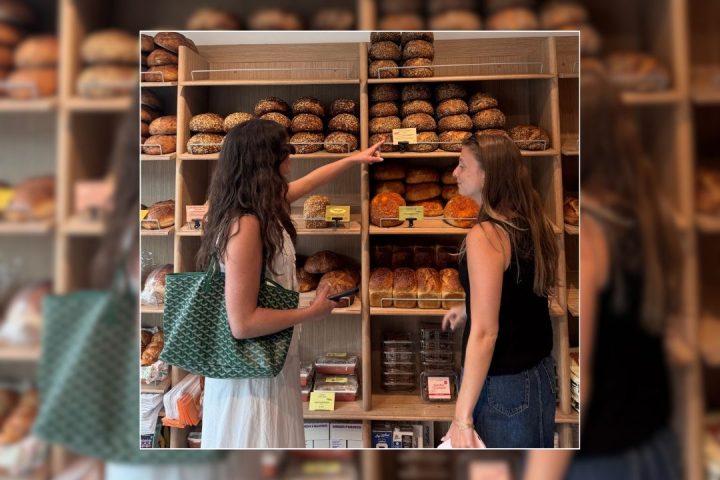

Somewhere between Gen Z’s obsession with romanticizing everyday life and our collective desire to spend less time staring at screens, sourdough became cool again. What started as a pandemic pastime has evolved into a full-fledged movement. Home bakers feed starters like pets, neighborhood bakeries sell out before noon, and social media is filled with videos of beautifully scored loaves emerging from Dutch ovens. And along the way, sourdough has earned another reputation: the bread that’s supposedly better for you.
But is it actually healthier than conventional bread—or is that just another wellness myth? The answer is more nuanced than a simple yes or no. I asked professional bakers and nutritionists for the lowdown on sourdough, and everything you need to know, including its health benefits and whether or not it’s actually good for you.
What Makes Sourdough Different?
Unlike most commercial breads, which rely on packaged yeast to rise quickly, sourdough uses a living starter made from flour, water, wild yeast, and naturally occurring bacteria. The dough then ferments slowly, often for anywhere from 18 to 48 hours before baking. That extra time is what makes all the difference.
“The biggest issue is speed,” says Carissa Newhouse, baker and founder of Bread Babe Tulum. “With conventional bread, yeast is added to make the dough rise quickly, usually in one to two hours. Sourdough is very different. Instead of using quick-rise yeast, it goes through a slow 18-24 hour fermentation process where the wild bacteria break down the gluten and phytic acid in the flour.”
Chef Johanna Hellrigl explains that during fermentation, a living ecosystem of wild yeast and beneficial bacteria begins transforming the dough long before it reaches your plate: “The yeasts produce carbon dioxide and some alcohol, while the bacteria produce lactic and acetic acids that create sourdough’s tang and significantly change the structure of starches and proteins in the dough.” Fermentation doesn’t simply make sourdough taste, well, sour—it fundamentally changes the structure of the bread itself.
@brooke_lynnmilne sourdough start to finish with time stamps
got a pesto parmesan & a lemon blueberry
recipe from @The Southern Sourdough Co. #sourdough #sourdoughbread #sourdoughstarter #baketok

Is Sourdough Healthier Than Regular Bread?
Sourdough does show many promising health benefits
One of the most common claims surrounding sourdough is that it’s easier to digest than conventional bread. While sourdough isn’t a cure-all, experts say there is legitimate science behind why some people feel differently after eating it. “Sourdough is essentially pre-digestion,” says Newhouse. “The longer the dough ferments, the more it breaks down the hard-to-digest components before the bread even reaches your body.”
During fermentation, bacteria and enzymes begin breaking down compounds found naturally in flour. According to Hellrigl, this includes some gluten proteins, certain fermentable carbohydrates known as FODMAPs, and phytic acid, a naturally occurring compound in grains. The fermentation process also creates organic acids that can slow how quickly starches are converted into sugar, which may help moderate blood sugar spikes after eating. “Long, wild-yeast fermentation tends to lower the glycemic impact of bread, increase mineral bioavailability, and make it more tolerable for many people,” Hellrigl said.
Registered nutritionist Kristy Thomas also points to the phytic acid as another an factor. “The fermentation process reduces a compound called phytic acid, which can stop your body from using minerals like iron, zinc, and magnesium,” she explains. “When you eat sourdough bread, your body can use these minerals more easily.” That doesn’t necessarily make sourdough a superfood, but it may offer some advantages compared to highly processed breads (“It’s still bread, not a supplement,” Hellrigl made clear!).
…But not all sourdough is created equal
Before replacing every loaf in your kitchen with sourdough, there’s one important caveat: not all sourdough is traditional sourdough. Some grocery store versions use commercial yeast and added flavorings to recreate sourdough’s signature tang without undergoing a lengthy fermentation process. “The data is mixed and not every sourdough loaf is automatically lower-GI or clinically better,” Hellrigl suggested. “It depends on grain choice, hydration, and how long and truly it’s fermented.” Thomas agreed: “Some manufacturers add flavorings and do not let the bread ferment for a long time. This means that the bread does not have the same health benefits as traditional sourdough bread.”
For consumers, the best approach is to join the TikTok trend and DIY, but the second best approach is to read ingredient labels and ask questions. If a bakery can tell you how long its dough ferments (and the answer is measured in hours rather than minutes) you’re likely looking at a more traditional loaf. That’s one reason many sourdough enthusiasts gravitate toward local bakers. Beyond fresher bread, there’s a level of transparency that comes with knowing exactly who’s making it, how it’s fermented, and what ingredients actually went into it.


So is it Healthier For Everyone?
It’s important to note that sourdough is not gluten-free. While fermentation can reduce certain gluten components and make bread easier for some people to tolerate, it still contains gluten and remains unsafe for people with celiac disease. “If you are celiac, sourdough is off the table because even reduced gluten is still too much,” says Hellrigl. For everyone else, tolerance is highly individual. Some people notice less bloating or digestive discomfort when eating long-fermented sourdough, while others may not experience a significant difference.
“In a culture built around convenience and immediacy, baking sourdough asks us to practice patience.”
The Real Reason Everyone’s Baking Sourdough
Of course, sourdough’s popularity isn’t solely about nutrition. Its rise mirrors a broader cultural shift toward slower, more intentional living. From gardening and pottery to reading physical books and cooking from scratch, many people are embracing activities that encourage them to unplug and create something tangible. “Younger generations have embraced baking sourdough partly because it’s the opposite of instant gratification,” Hellrigl said. “It’s an everyday food that demands patience.”
Newhouse sees the same trend. “We live in a fast-paced, digital world and baking sourdough forces you to slow down. At the end of the day humans are hardwired to make things.” There’s something undeniably satisfying about caring for a living starter, waiting for dough to ferment, and pulling a warm loaf from the oven after hours—or even days—of anticipation.
And perhaps that’s the real reason baking sourdough continues to resonate. While traditional sourdough may offer digestive and nutritional advantages over many commercially produced breads, its appeal goes beyond health. In a culture built around convenience and immediacy, baking sourdough asks us to practice patience. It turns flour, water, and time into something meaningful. And in a world that constantly asks us to move faster, that may be exactly what people are hungry for.

Angelika Pokovba, Contributing Writer
Angelika is an avid traveler and wellness enthusiast from New York City who lives in Tulum, Mexico, and speaks six languages. Her deep connection to nature influences all her decisions, driving her to explore unique destinations and discover hidden gems. From curating curiosities to delving into cosmologies, she finds inspiration in the world’s little-known wonders.
The post Is Sourdough Actually Healthier? Experts Break Down the Bread Everyone’s Obsessed With appeared first on The Everygirl.