




For years, I scoured the skincare shelves for products that would fade the dark marks left from my acne. I felt like I tried everything: serums, creams, and scrubs that claimed to fade “acne scars.” After finding a dermatologist who specialized in melanin-rich skin, I realized why my dark spots weren’t fading. The products I was using weren’t made for the kind of scarring I had—I needed to specifically target hyperpigmentation.
Instead of harsh exfoliators and aggressive ingredients, my derm told me to be easier on my skin. I was skeptical. I had some pretty heavy-duty scarring, and gentle didn’t seem like it was going to cut it. What about the “if it’s burning, it’s working” or “beauty hurts” approach to skincare I had always heard? But my derm insisted that nourishing my skin, supporting its natural healing process, and using ingredients that targeted excess melanin production, would finally get me to the point of seeing results.
Desperate to try anything, I tried something I never expected as a reformed beauty maximalist: doing more with less. And it worked. My scars started fading faster than ever before. But hyperpigmentation is something I’ll always be dealing with, so I checked in with skincare experts to see if I should update my hyperpigmentation summer skincare routine for summer. I spoke to Malika Sloan, licensed medical aesthetician and the founder of Sloan Studio in New York City, and Dr. Sheila Farhang, board-certified dermatologist and founder of Avant Dermatology in Tucson and Beverly Hills. They both agreed: hyperpigmentation can peak in the summer.
Read on for their expert recommendations on how to protect your skin in the summer, prevent hyperpigmentation, and support your skin health. Plus, I’m sharing my personal selection of the best hyperpigmentation products to keep me skin glowing—even in the peak of summer.
What is Hyperpigmentation?
Hyperpigmentation, also known as post-inflammatory hyperpigmentation or PIH, is, in its simplest terms, the dark spots left behind after a breakout. It’s not—as I assumed in my youth—the same as acne scarring (which usually refers to textured skin) or lingering redness. Hyperpigmentation is common, but still misunderstood.
“Hyperpigmentation is the darkening of the skin caused by an increase in melanin production,” explains Sloan. “It can be triggered by sun exposure, inflammation, wounds or acne, hormonal fluctuations, certain medications, underlying skin conditions, and even some foods.”
According to Dr. Farhang, almost all hyperpigmentation falls into these categories:
- Sun-induced: Sun spots, uneven skin tone
- Post-inflammatory hyperpigmentation: From acne, irritation, inflammation, or injury to the skin
- Melasma: Worsened by sun exposure and heat in the setting of genetics and hormone predisposition
In all cases, hyperpigmentation is the skin’s defense mechanism. “Our skin sees excessive sun exposure as a threat, so it responds by producing more pigment as protection,” says Sloan. “It’s actually one of our body’s smartest defense mechanisms, but unfortunately it’s not always the defense mechanism we want.”
PIH, specifically, is your skin attempting to heal after a breakout. And it’s more common in people with darker skin tones, says Dr. Farhang. “People with a deeper skin tone are more responsive to triggers such as inflammation, UV sun exposure, visible light (screens, indoor lights, etc.), heat, and hormones.”
Why Does My Hyperpigmentation Get Worse in the Summer?
According to Dr. Farhang, “Hyperpigmentation gets worse in the summer due to increased sun exposure. The heat can also contribute to hyperpigmentation in the setting of melasma.”
The catch-22 comes in treating hyperpigmentation: Many of the ingredients used to treat hyperpigmentation make your skin even more sensitive to the sun. But that extra sun exposure in the summer doesn’t mean stopping your skincare routine. It’s simply a call to be more strategic.
How to Treat Hyperpigmentation, According to a Dermatologist
For our skin to heal, we should treat our acne like any other wound—with care. You wouldn’t douse a hand cut with sanitizer every morning and night. Dermatologists agree: The key to healing your skin (no matter the season) is supporting, preserving, or healing your skin barrier. And this all depends on how your skin feels. If your skin is overly reactive and sensitive, you might have a compromised skin barrier.
1. Avoid aggressive ingredients
I personally damaged my skin barrier with too many actives and scrubs ( Dr. Farhang warns against “aggressive physical exfoliation” because it might damage the skin barrier). It was a negative feedback loop: I’d break out more, then overcompensate again until I finally prioritized healing.
Don’t make my mistake. “Don’t skip hydration. This is one of the biggest mistakes I see every summer. People assume that because they’re oily or sweaty, they don’t need hydration, when in reality that’s often when their skin needs it most,” says Sloan. “Summer skin is all about balance.”
According to Sloan, you should remember “consistency rather than intensity. Everyone wants to throw the kitchen sink at pigmentation, but summer usually isn’t the time for that. I’m a huge believer in controlling inflammation, wearing SPF religiously, and using pigment-suppressing ingredients that can safely be used year-round. My goal in the summer isn’t necessarily to erase pigmentation overnight—it’s to prevent it from getting worse while keeping the skin healthy and strong.”
“I always tell my patients to avoid starting any new harsh skincare ingredients aggressively,” says Dr. Farhang. This might look like introducing too many acids at the same time (such as glycolic, lactic, salicylic acid, kojic acid, and tranexamic acid). You might also be starting prescription retinoid too fast. Whatever you’re doing, you can ease your skin into new products for a balanced hyperpigmentation routine.
2. Introduce pigment inhibitors
While you should be cautious about your skin barrier, you don’t have to compromise your routine, says Dr. Farhang. “You technically don’t (and shouldn’t) stop skincare ingredients in the summer—especially the pigment inhibiting/correcting ones.”
Treating PIH is about being proactive in preventing it. Pigment inhibitors prevent excessive melanin production before the dark spots sprout. Farhang recommends ingredients such as:
- Cysteamine
- Retinoids
- Kojic acid
- Azelaic acid
- Vitamin C
- (Light) Beta-hydroxy acids
- Tranexamic acid
- Niacinamide
- Growth factors
- Antioxidant-rich skincare
3. Ask your derm about in-office treatments
Want to take your hyperpigmentation products one step further? Ask your dermatologist about what in-office treatments might be right for you. While you might want to wait until fall to start some treatments, experts say you don’t have to avoid a trip to the dermatologist just because it’s summer.
“In the summer months, I often have clients take a break from stronger prescription retinoids, deep chemical peels, and aggressive resurfacing lasers,” says Sloan. “Instead, I prefer focusing on facials, light superficial peels, LED therapy, and treatments designed to nourish, hydrate, and maintain skin health rather than aggressively resurface it.”
Dr. Farhang takes a similar approach, prioritizing protection. “Getting lasers done is fine,” she says, as long as you’re vigilant about sun protection. “In the office, microneedling with peels is great,” she adds. “The best treatment for brown sun spots is IPL, which targets pigment. I’m more careful about this one because you can’t even be tan or the treatment can burn your skin.”
Personal Must-Haves: The Best Products for Hyperpigmentation
“My three biggest tips when building a routine for hyperpigmentation are simple: decrease inflammation, prioritize antioxidants, and wear a lot of SPF,” says Sloan.
I try to follow these golden rules with both my morning and my evening routine, creating a summer skincare toolkit that prevents, protects, and treats my skin. My skincare routine is mostly about hydration and protection, along with products that specifically target hyperpigmentation and dark spots. I stock up on antioxidants as pigment inhibitors and make sure to keep my skin hydrated. Of course, I slather on sunscreen and reapply throughout the day.
1. A gentle cleanser
Choose something to “restore and preserve your skin barrier,” says Dr. Farhang. A cleanser has to be effective enough to actually clean your skin, but not strip away its moisture. Depending on how reactive your skin can be, try a soothing cleanser that addresses acne and inflammation.


2. Antioxidant serum
Vitamin C is the hero antioxidant for dark spots and hyperpigmentation. Sloan recommends a “medical-grade Vitamin C serum to combat free radicals and environmental damage.”


3. Brightening Serum
A brightening serum during the day helps prevent extra melanin production. Sloan says you should pick “a pigment-correcting serum containing ingredients like tranexamic acid and niacinamide.”


4. Moisturizer
The last thing you want to do in the summer is slather on moisturizer. “People assume that because they’re oily or sweaty, they don’t need hydration,” says Sloan. “When in reality that’s often when their skin needs it most.” I like a light hydrating moisturizer, and I make sure it’s non-comedogenic so I don’t break out. Sloan recommends choosing a moisturizer for your specific skin type.


5. Retinoid at night
Dr. Farhang recommends adding a gentle retinol to your nighttime routine to work while you sleep. Applying it at night prevents that instant sun exposure. And instead of applying it every night, start slow with alternate days.


6. Don’t forget the SPF
Sun exposure is a primary cause of hyperpigmentation. SPF is your best defense, says Sloan. “Reapply your SPF every 60–90 minutes and be consistent.”


Langa Chinyoka, Contributing Writer
Langa is a Los Angeles-based writer and strategist. She is currently an editor and content strategist at a marketing agency. Her work has appeared in The Paris Review, British Vogue, Highsnobiety, Eyeswoon, Camille Styles, The Good Trade, and more.
Experts Consulted

Malika Sloan
Sloan Studio was founded by Malika Sloan, a medical aesthetics expert with nearly a decade of experience working at one of New York City’s most respected med spas. Throughout her career, Malika has treated a diverse clientele ranging from NYC locals to high-profile celebrities, refining her approach through years of hands-on experience with advanced technologies, medical-grade skincare, and results-driven protocols.

Dr. Sheila Farhang
Dr. Sheila Farhang is a board-certified dermatologist and double-fellowship trained cosmetic surgeon as well as a reconstructive Mohs micrographic (skin cancer) surgeon. “Dr. Sheila” as many know her as, stands out in the dermatology space as she has expertise in both integrative skincare and cutting-edge procedures. She is also highly regarded in the female empowerment space being a founder, CEO, and multi-business owner.
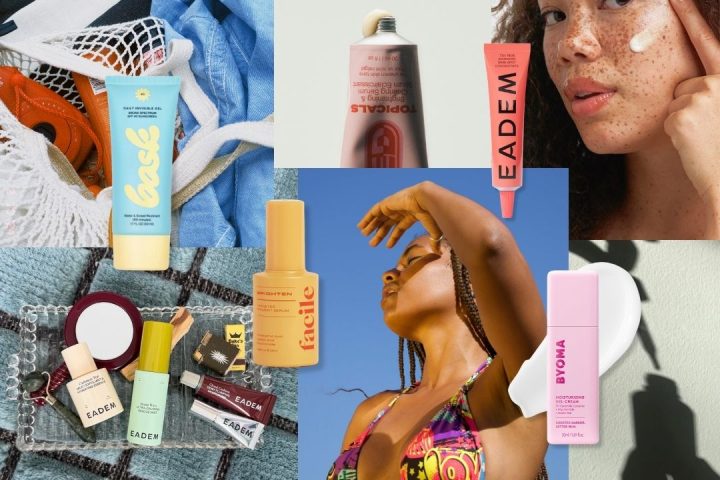
Products included in graphics linked within article. Feature graphic images credited to: gusi blanco | Dupe, Topicals, Facile, @eadem | Instagram, Carla Candace | Dupe, and Cora Pursley | Dupe.
The post Dermatologists Say Hyperpigmentation Peaks in the Summer—Here’s How I Keep Mine In Check appeared first on The Everygirl.