



Every month, we’ll take a deep dive into a simple technique or piece of kitchen wisdom that will change the way you cook. Back to Basics isn’t about memorizing another recipe — it’s about learning something so well you don’t need one.
I don’t think I’ve measured the ingredients for a salad dressing in years. Once you understand the basic formula — and, more importantly, what to do when it doesn’t taste quite right — there’s really no reason to follow a recipe. The base of a vinaigrette is an easy combo of oil + acid + salt, and everything after that is an opportunity for flavor. Here are the key things to get it right:
1. Start with the acid. Red wine vinegar, white wine vinegar, champagne vinegar, sherry vinegar, apple cider vinegar, rice vinegar, and fresh lemon juice are all great acids and they’ll all make different vinaigrettes. Something straightforward like red wine vinegar or fresh lemon juice is a good starting point, and once you get comfortable, you can branch out and even start mixing acids for a balance of flavors.
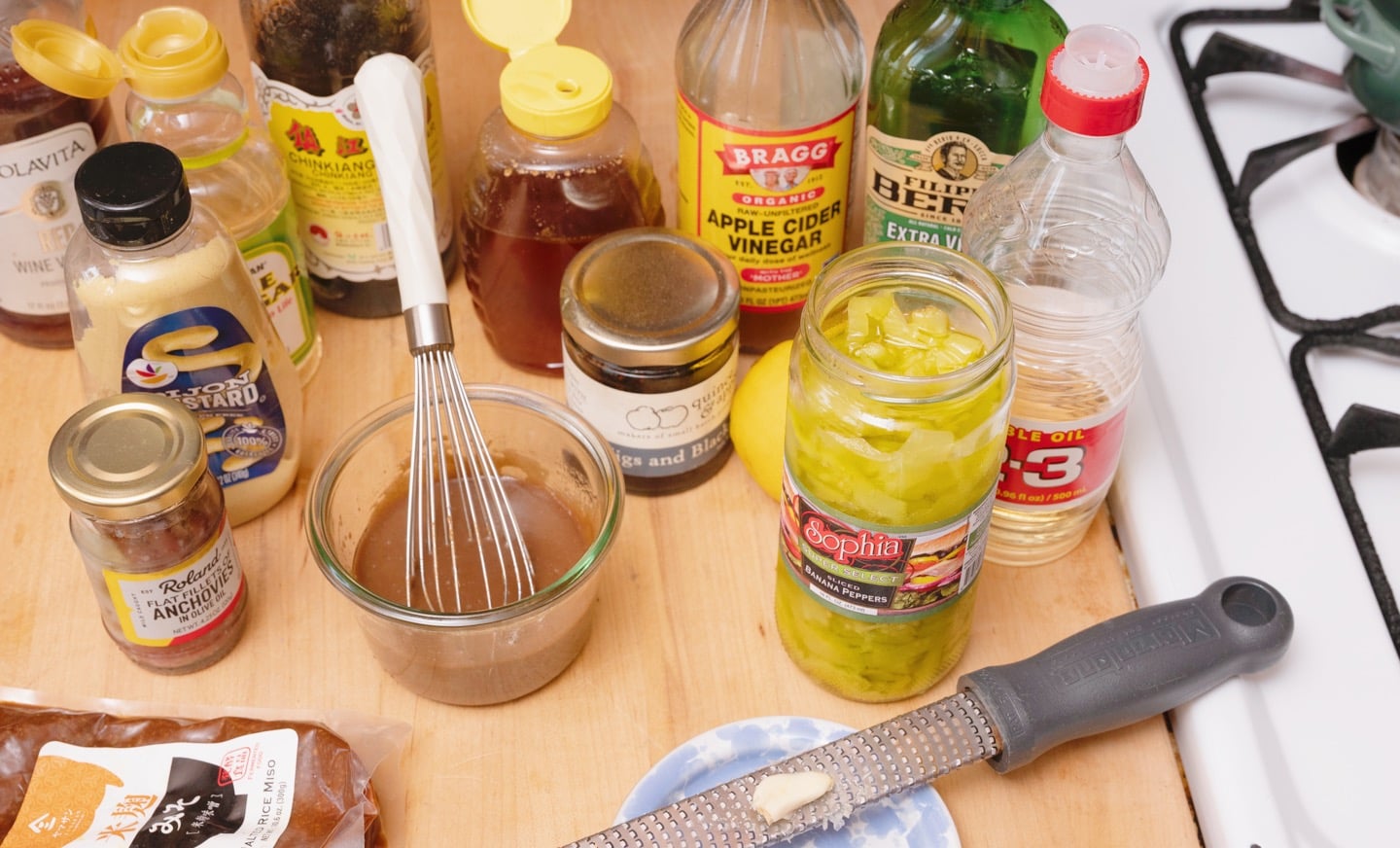
2. Next add flavor. Some of my favorite boosts are honey, Dijon mustard, grated garlic, minced shallots, chopped herbs, a spoonful of fig jam, the last scrape of pesto from the jar, a splash of pepperoncini brine, a teaspoon of miso, an anchovy. Not all at once, obviously, but see where your heart takes you. (If you’re using something strong like garlic or shallot, let it hang out in the acid for five minutes to soften the bite.)
3. Salt goes before oil. This is a small detail, but salt dissolves better in vinegar so season first. I like to be aggressive with my pinch of salt since the dressing has an entire bowl of salad to boost. Give it a good whisk or shake to fully incorporate.
4. Learn your favorite ratio. The classic vinaigrette ratio is three parts oil to one part acid. I like punchy flavors, so I probably land more like 2:1. Save yourself the dishes and just eyeball a pour of oil that’s somewhere between two and three times the amount of acid, depending on how strong you like your dressing. Give it a good whisk or shake again to incorporate.
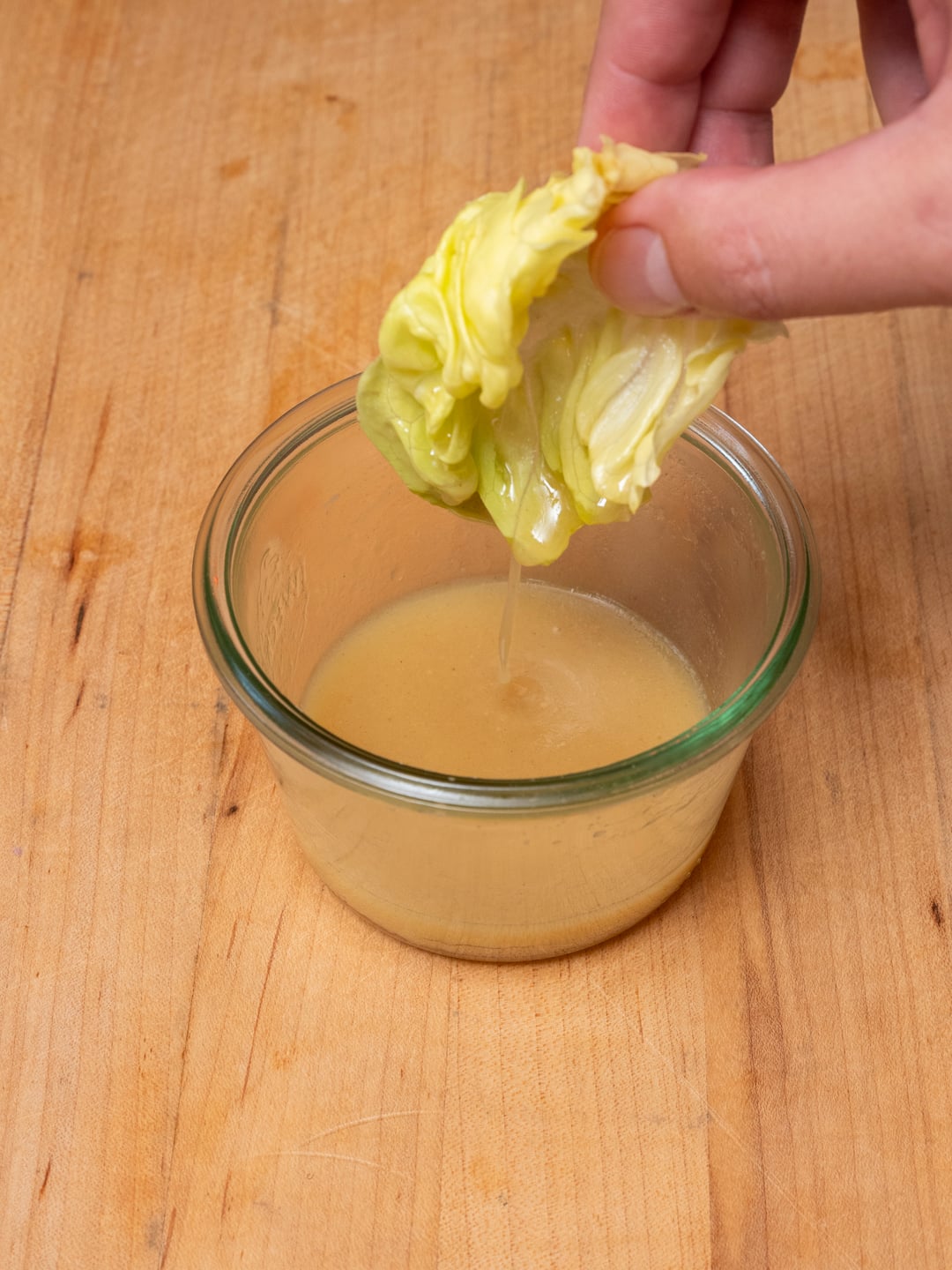
5. Taste in situ. The only way to get an accurate taste test is to take a leaf from your salad and dip it into your dressing. Too sharp? Add more oil. Too bland? Add more acid. Too bitter? A squeeze of honey will round it out. Too flat? Add a pinch of salt. Too salty? Grab the oil again. Keep making tiny adjustments until your leaf dip is perfect.
6. Go with your gut. Give a person a vinaigrette recipe and you feed them for a day; teach a person to make a vinaigrette and you feed them for a lifetime. Is that how it goes? Anyway, the point is, once you get the feeling for a choose-your-own-adventure vinaigrette, you start seeing half a lemon, three sprigs of dill, and the bottom of a mustard jar as the start of something exciting.
Casey Elsass is a food writer, recipe developer, and cookbook author based in Brooklyn. He is the author of the bestselling cookbook What Can I Bring?: Recipes to Help You Live Your Guest Life and has co-authored more than 30 cookbooks. His writing has appeared in publications including The New York Times, New York Magazine, Bon Appétit, NPR, Food52, and, of course, Cup of Jo.
P.S. 10 fall dinners, and five more salad dressings.
(Photos by Pacifico Silano.)